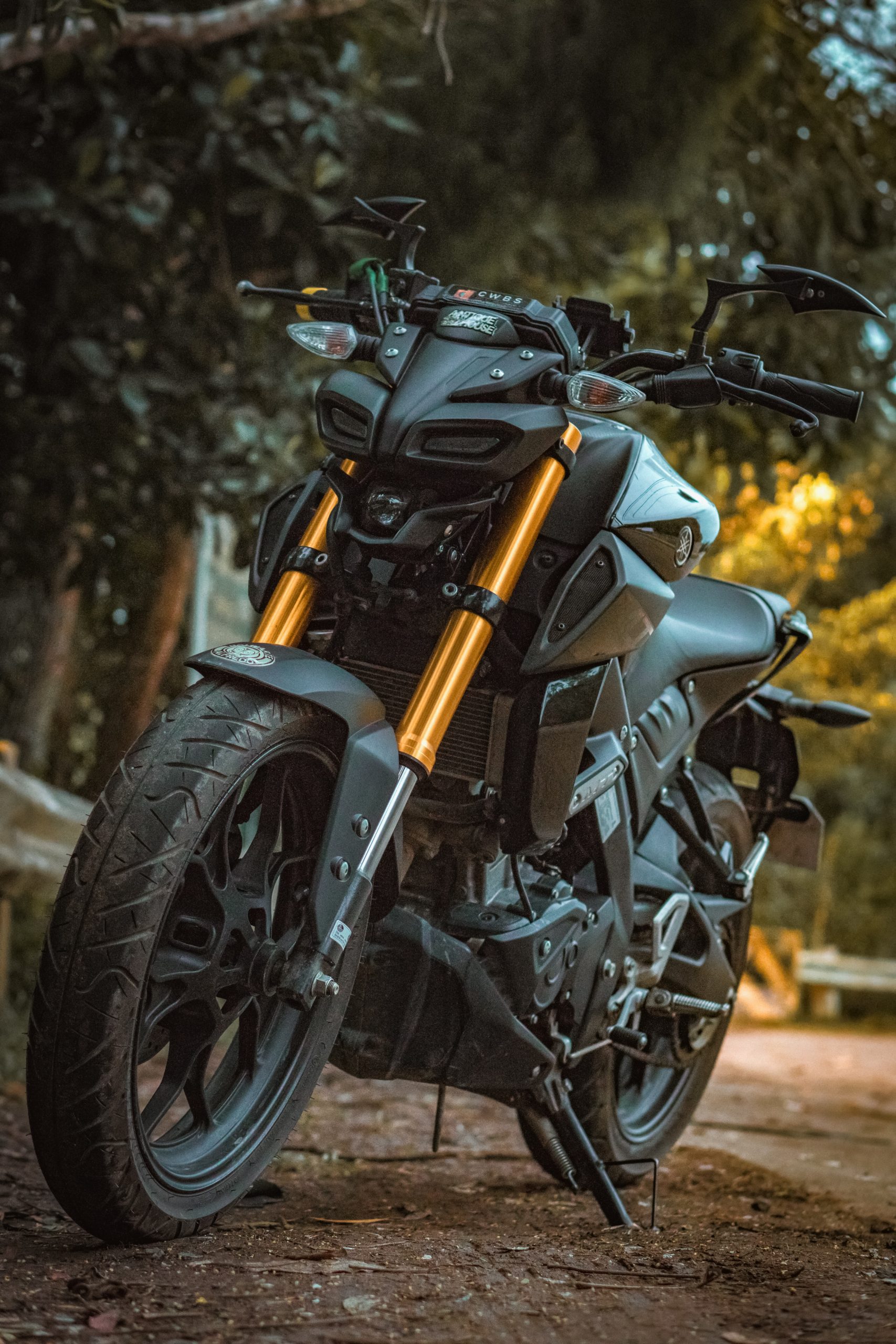

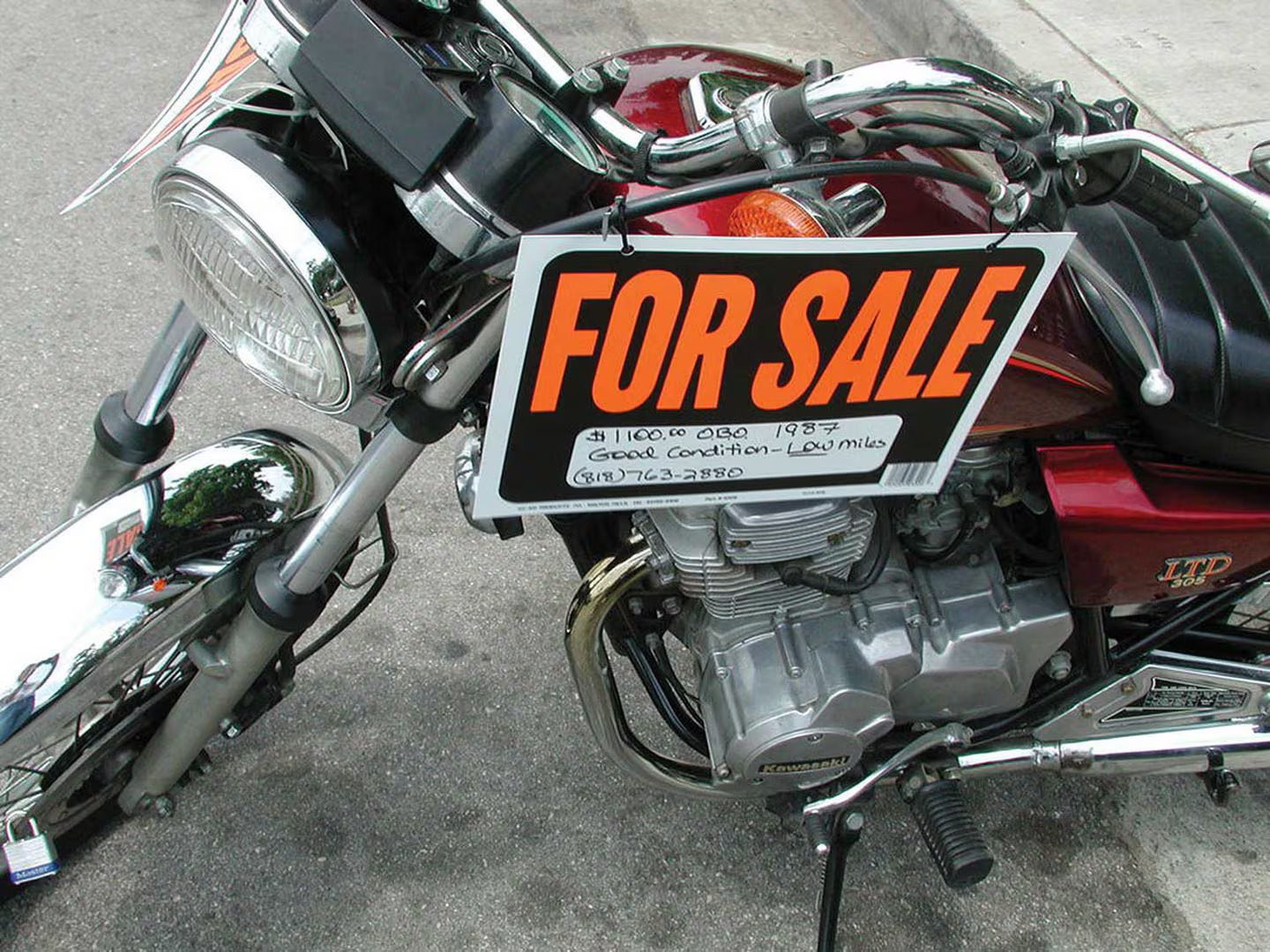
Buying a used bike is exciting, sometimes maybe a little too exciting. You see the ad, the price looks fair, the photos look clean and your brain is already halfway down the road. Many of us have been there. But before you load up the truck and drive across town, there’s some homework to do, and it starts with one number. The VIN.
Plenty of buyers will spend an hour in a seller’s driveway checking fork seals and squeezing brake levers, then never once confirm that the bike sitting in front of them is the bike described on the title. The mechanical inspection matters. We’d never tell you to skip it, butx don’t let it be the only inspection you do.
Where the Number Lives
 Credit: Honda
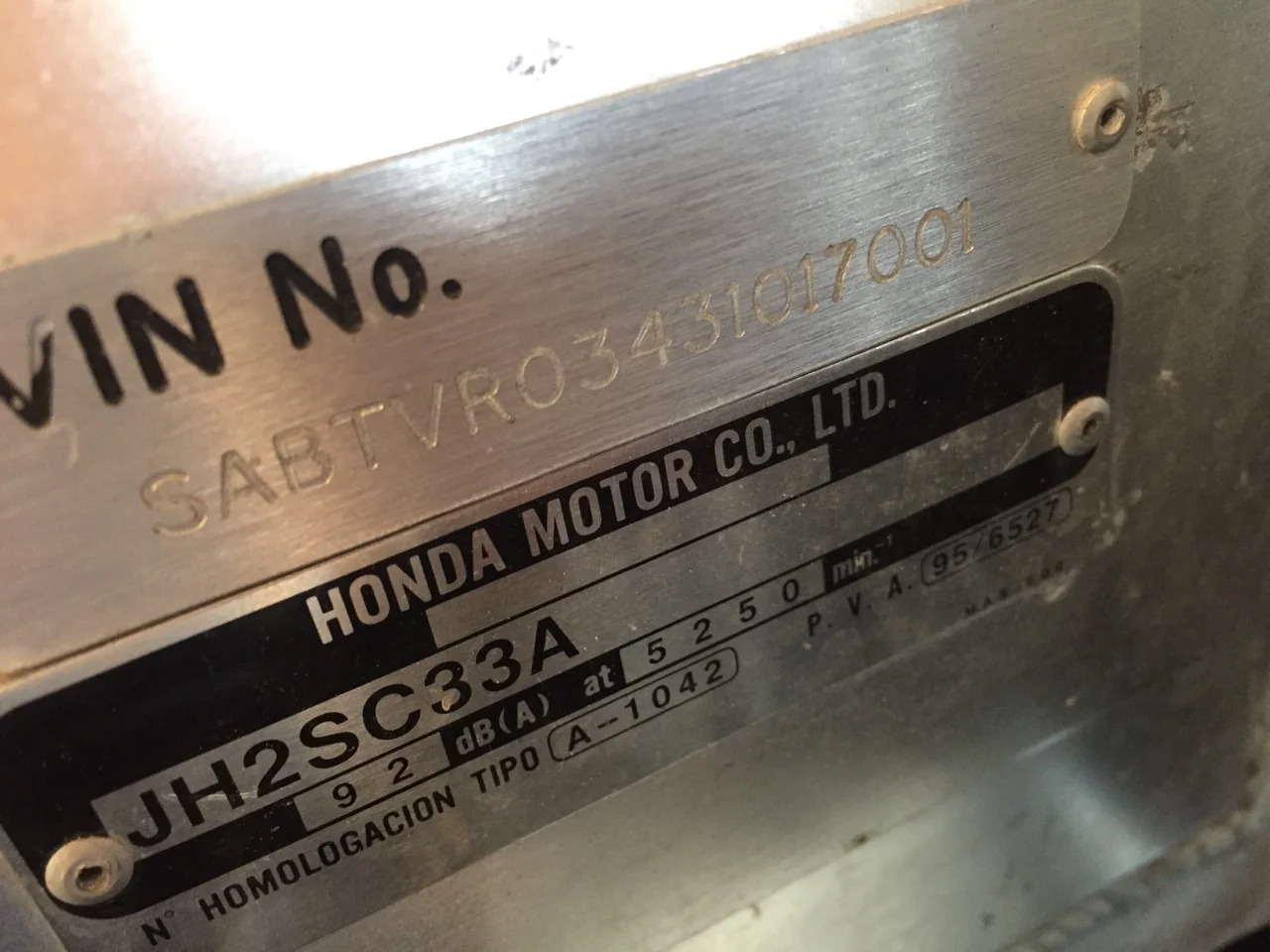
Every motorcycle built since 1981 carries a 17-character Vehicle Identification Number, usually stamped into the steering neck of the frame behind the headlight. Turn the bars full lock to one side and look at the neck. There it is. Some manufacturers also put the number on a riveted plate or a sticker near the swingarm, and those are fine as far as they go, but the stamped number is the one that counts. A plate comes off with a drill. The stamp is the frame itself.
The number isn’t random, either. The first three characters identify the manufacturer and country of origin, the next five describe the model and engine, the tenth character is the model year, and the last six are the serial number the factory assigned when the bike went down the line.
Pro Tip: When you call to set up a viewing, ask the seller to text you the VIN. Every legitimate owner can walk to the garage and read a number off a frame. Some will even send a photo of the stamp without being asked, which tells you something good about them. Hemming and hawing tells you something too.
Thirty Seconds with a Decoder
 Credit: Pexels
Once you have the number, run it through a decoder before you go anywhere. A free tool like https://vingurus.com takes the VIN and returns the make, model, model year, engine and the plant where the bike was assembled.
What you’re looking for is daylight between the decode and the ad. The model year is where sellers fudge most often, since a 2019 brings more money than a 2016 and hardly anyone checks. Trim levels get stretched too. Put aftermarket bodywork on a base model and the listing suddenly says limited edition. Maybe the seller is lying and maybe he honestly doesn’t know what he owns, because he never checked when he bought it either. You’d be surprised how often it’s the second one. Either way, if the decode and the listing disagree, bring it up and listen carefully to the answer.
Paper Meets Steel
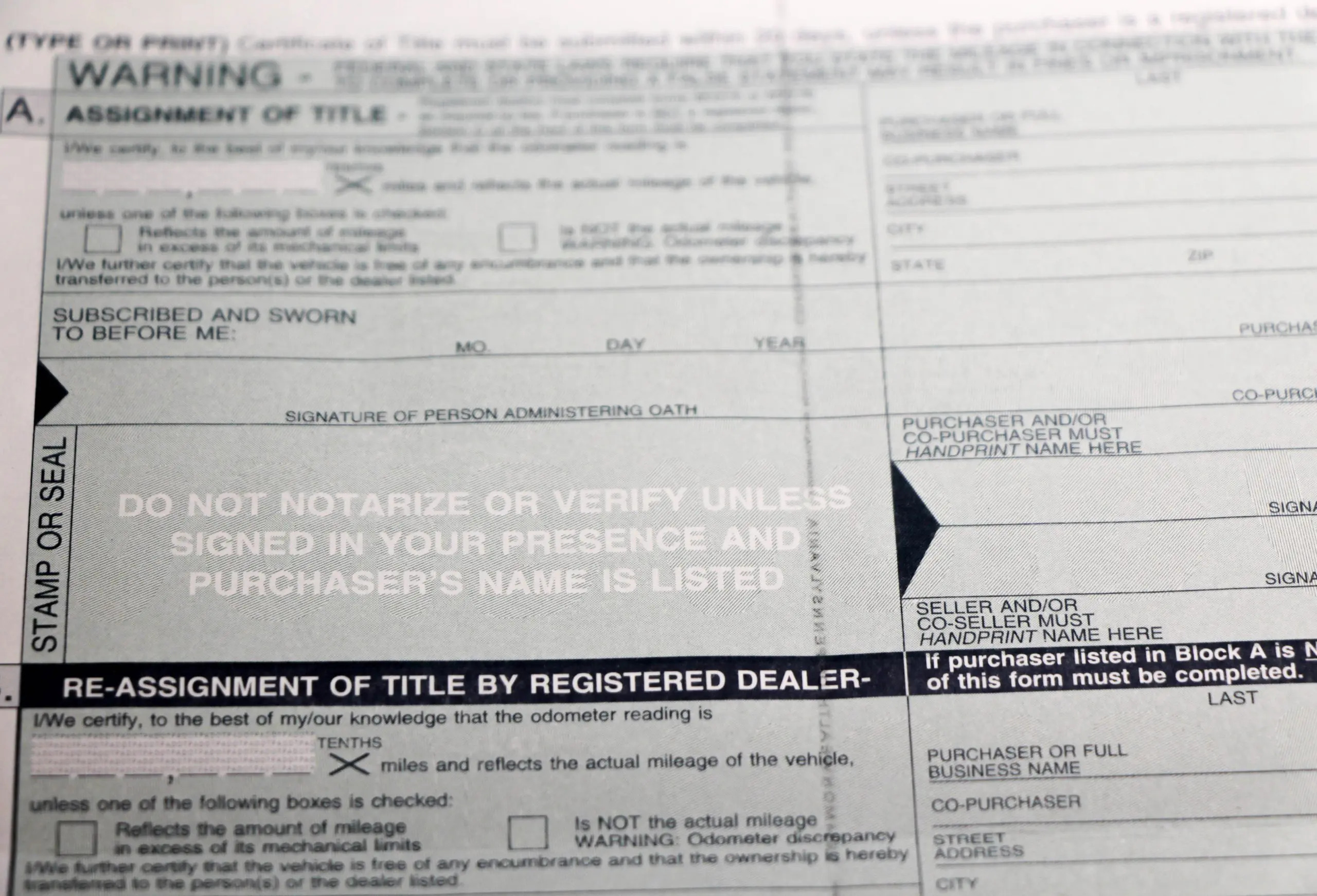
At the sale, lay the title next to the frame and compare all 17 characters, one by one. They have to match. A single wrong digit could be a DMV clerk’s typo or a title that belongs to another motorcycle entirely, and there’s no way to tell which one from a driveway, so it’s the seller’s problem to sort out before any money moves.
Study the stamping while you’re down there. Factory characters sit evenly spaced, struck to the same depth. If you see grinding marks around the number, uneven spacing or fresh paint on the steering neck, the frame may have been re-stamped. Nobody re-stamps a frame for an honest reason. Whatever the price is, it isn’t low enough.
The rest of the title deserves a minute too. Any lien holder needs to have signed off, since a lien follows the bike and not the seller. Look for brands like salvage or rebuilt while you’re at it. A branded title on an older machine isn’t automatically a walk-away, but it cuts the value and it should have been in the ad from day one.
Pro Tip: Bring a flashlight. Steering necks sit in shadow, and a quick glance with a phone light is exactly how doctored stampings slip past people.
About Stolen Bikes
 Credit: Autoevolution
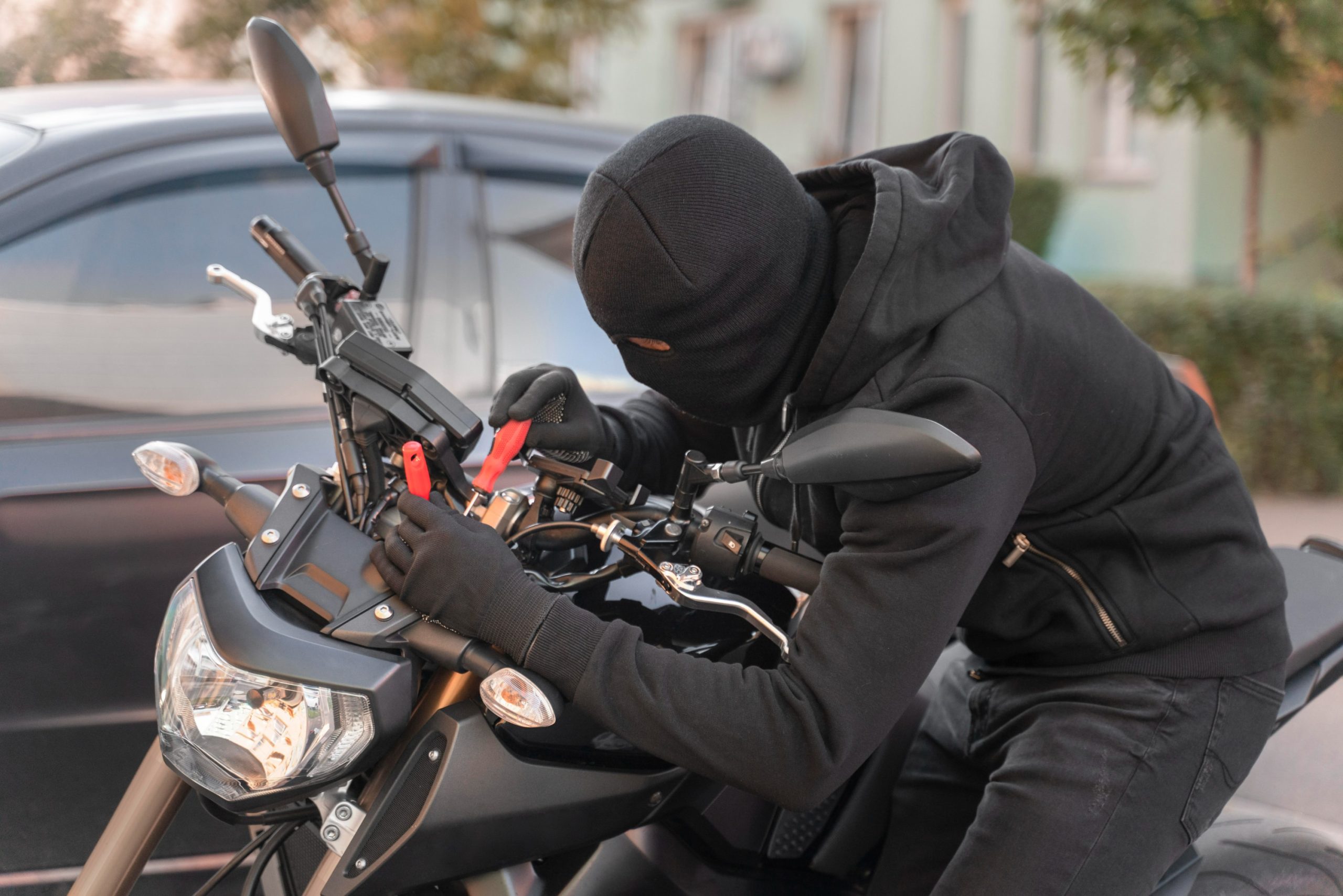
- Recovery rate, a little over 40 percent. Nobody knows exactly where the rest end up, though plenty get parted out and some resurface in the classifieds wearing new paint and paperwork that doesn’t survive a close look.
Here’s the part that stings. Buy one of those bikes in complete good faith and it still isn’t yours. When the VIN gets flagged at registration, the motorcycle goes back to the insurer or the original owner, and the money you paid stays gone.
What It Can’t Tell You
 Credit: Airtasker
Fair is fair, so know the limits. A VIN check confirms identity, nothing more. Worn chains and leaking forks don’t show up in any database, and even paid history reports only capture accidents that produced an insurance claim. Plenty of crashed bikes were rebuilt in a garage and never told anyone about it.
So the order of operations is simple. Decode the number from your couch, match everything against the ad, and only then spend your Saturday and your gas money going to see the bike in person. Most sellers out there are honest. The VIN check is how you stop taking that on faith.