
Forum Replies Created
Review Time: Top 5 Cool Motorcycle Helmets
-
AuthorPosts
-

Rab
ParticipantI might be wrong, but I think the inside of the arms might be textile on that jacket.
Some reviewers are recommending ordering one size larger.
ParticipantI think you got the double whammy of riding in the rain as well as riding at night. Either will add more danger to the ride, so experiencing both was a baptism of fire

Rain-X or similar, yes, an absolute MUST in my opinion and an anti-fog agent for the inside. Also a rubber finger-wiper to slip-on over your gloved forefinger (just in case). Turning your head left and right now and again (while keeping eyes looking ahead) will also help a lot (depending on your windscreen).
Avoid painted lines, arrows, etc. (slippery), puddles (you don’t know how deep they are), metal plates and grates (very slippery).
The main thing in the wet is just to slow down, minimize lean in corners and dress appropriately for the weather (use bright colors too or a Hi-Viz vest).
Keep within the speed limits (an indicated 65 or less) and I don’t think you’ll have any problems with aquaplaning; I haven’t and I commute all year in NorCal.
LEAVE AT LEAST FOUR SECONDS STOPPING DISTANCE between you and the car in front (two seconds in the dry) as braking must be done a lot more gingerly in the wet.
The books say you should avoid the first half-hour of rain to allow the accumulated oil and grease to run-off. Wet or dry, you should also avoid the center of the lanes as this is where it first accumulates.
Now, back to my Sunday Post and the Broons
ParticipantYou forgot the new for 2008, bargain priced, fully faired, 50 mpg, Suzuki GSX650F, a fantastic commuter and sport-tourer.
It’s very popular in Europe, where many people actually use their motorcycles as transport (what a concept!).
I too have a 70 mile round-trip commute, mostly freeway, and this bike is ideal. It has a four-cylinder, fuel injected, water -cooled engine with of plenty of power for one or two-up, immaculate roadholding; very smooth and comfortable too.
I don’t think there’s any doubt that the fairings do make a difference as to how much wind blast and rain you’ll catch.
You can see the GSX650F here:
http://www.youtube.com/watch?v=PrZGLvqU9N0
As I own one, I’m obviously more than a little biased. Your mileage may vary as they say
ParticipantI guess you’re in SoCal as here in NorCal we can get plenty of rain in the Winter.
Motorcycle grade leather’s definitely better for protection but armoured textile is more versatile and can be waterproof and windproof and vented or mesh (for hot weather) or all of the above (with removable liners).
If you go with leather, you should get one which has zippered vents and armour. Also pack some PVC or similar over-clothes in the Winter as there’s nothing more miserable than riding in a heavy soaking-wet leather jacket.
You’ll probably end-up with more than one jacket if you ride all year.
I like my Olympia Motosports Airglide gear which is probably as near as you’ll get to an all-weather jacket and pants. See the review on the home page.
That said, there’s lots of similar gear now from loads of vendors and there are some real closeout bargains to be got in “last years fashions”.
Check out:
Iron Pony
Competition Accessories
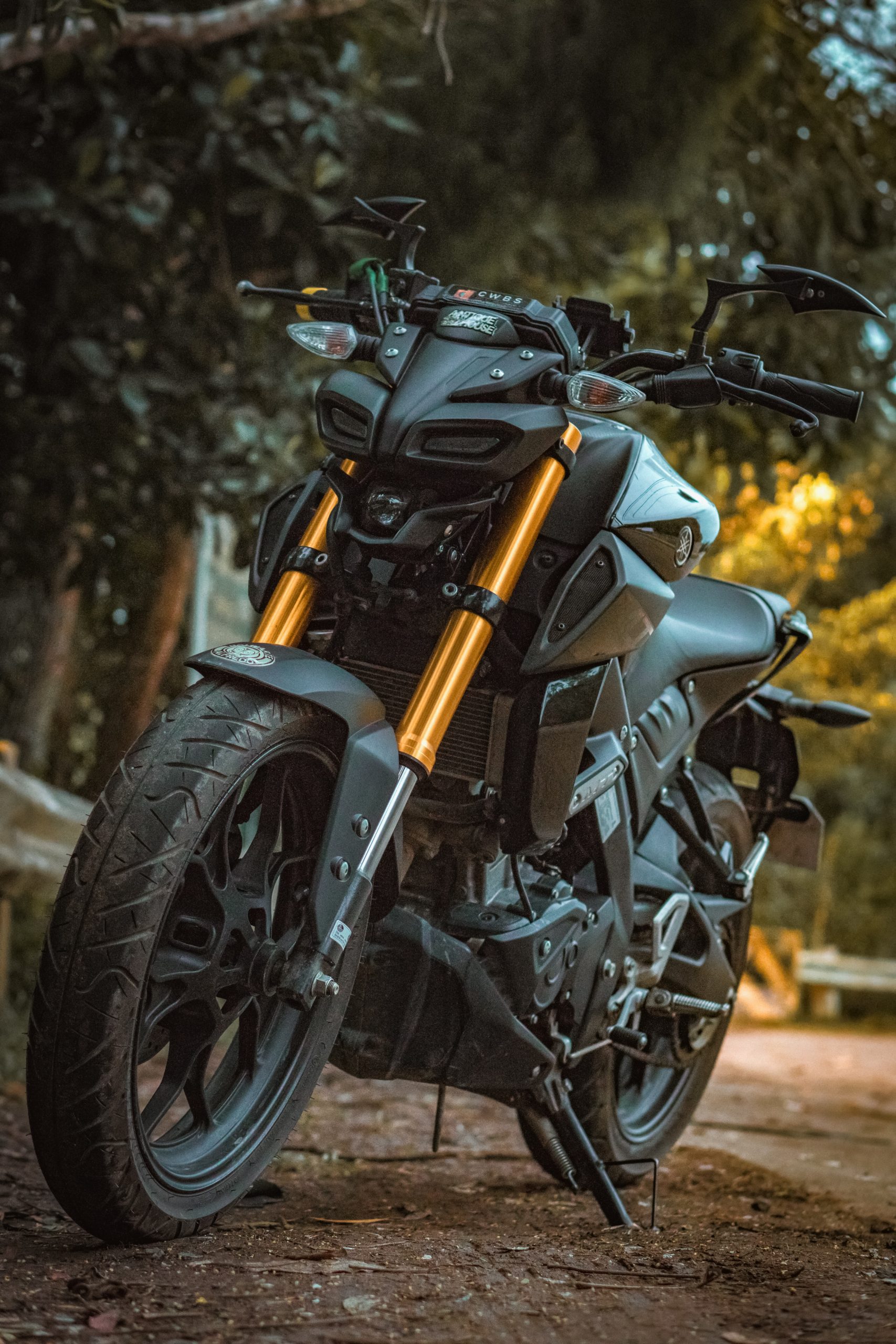
ParticipantLooks like a Ducati Monster with that exposed trellis frame. I like it; especially the black one.
Perhaps more relevant to a beginner forum, I also like their new TU250 a lot (the color, not so much).
It’s a real throwback. A standard style thumper (single cylinder) with a drum brake on the back; very retro and looks great.
Now if they’d just do something like that in a 350-450, maybe in a twin, it would be a great commuter / utility / gas-saver bike.
ParticipantIf you use the “Google” search box at top right of forums page, you can search previous discussions.
Here’s what I found re. Johnny Pag bikes using that search box:
https://www.bestbeginnermotorcycles.com/forum/forum-topic/1246/anyone-ever-seen
ParticipantThose Vega Touring waterproof boots are a good value for the cost conscious beginning motorcyclist.
I bought a pair for my Wife who occasionally rides pillion with me.
They definitely don’t have the heft or quality of my Alpinestars Web Gore-tex boots and I don’t think they would last nearly as long, but for something dry and comfortable to get you started, they can’t be beat value-wise in my opinion.
Tour-master Solution WP Road Boots look like a good value too but I haven’t tried those.
The beauty of the touring style boots is that you can get off the bike and walk around town in them which you can’t easily do with all motorcycle boots.
Zippers and Velcro make life a lot easier than tying laces too.
ParticipantIt’s just buyer’s remorse and will likely pass.
Don’t try to run before you can walk.
No offence intended, but if this is your first motorcycle, you’re still so green that you don’t even know what you don’t know yet. MSF BRC plus one week’s experience is zero, nada, zip, nowt, bugger-all, none, in the grand scheme of things.
Take the Rebel out into the twisties, into heavy traffic and onto the freeway as and when you feel ready for it (stay in the slower lanes). Ride it in the rain, ride it in heavy winds, etc.
You still have a lot to learn and “lacking in acceleration” is a good thing when you’re learning (with the possible exception of on the freeway).
First gear *does* feel very short on a Rebel so you’ll feel like you want to change into second just about as soon as you get rolling, and while that’s okay, it can safely rev higher than you think it can based on engine sound alone. If it’s the same as the Nighthawk, the Rebel has markings on the speedo that show the appropriate speed range for each gear, so you’ll be able to tell if you’re over-revving or not. You’re almost certainly not though unless you have a really heavy hand, in which case you definitely don’t want a bigger faster bike until you learn some finesse.
Take it one step at a time, as you’ ll find out when you stretch your legs (and crap yourself once or twice), that the Rebel’s probably more than enough for you right now…
ParticipantThe problem here in California when on a day trip in the Summer is that it’s too hot to walk around with your gear on, so what I do is run a thin plastic covered steel cable through the bike frame or whatever, and through a jacket arm and pant leg thus I can lock the over-clothes to the bike. Snug it all down with a bungee net to stop them from falling off. ‘ Never had anything stolen yet (knock on wood!).
J.C. Whitney sells a 15′ cable which is just about the right size for two sets of gear (rider and passenger); a 6′ cable will probably work for a solo rider. You can lock the looped ends together with a padlock. Get a helmet lock for your helmet, then you only have your gloves to worry about. They’ll probably be okay secreted in your full face helmet, or you can carry them in a tank bag carried over your shoulder (like the Cortech mini tank bag which comes with a handle and a shoulder strap).
ParticipantI don’t think there is one jacket that’s perfect for all weather but the Olympia Motosports “Mech Tech 3-in-one” gear is pretty versatile. I carried a PVC rain jacket and pants too though when it was my only jacket. See the review of the Airglide jacket on the BBM home page.
Also:
http://www.olympiamotosports.com/home.html
Jackets that are good in the rain are generally not good in the heat and vice-versa.
I’d suggest something like the Airglide for hot and moderate/cool weather riding, plus a waterproof exterior touring jacket for the cold and rainy months. You can get close-out clothing really cheap if you shop carefully.
September 29, 2008 at 4:28 am in reply to: My first crash on a street at speeds. Damn Gravel. #12895ParticipantI know (also from experience) that it’s difficult to think rationally if/when something like this happens, but the first thing you should do in a situation where your leg’s trapped under the bike is to hit the kill switch if the engine’s still running, swiftly followed by turning off the ignition.
At best, an engine running on it’s side may be starved of oil and therefore, will be damaged if left in that state for long. At worst, depending on the damage, fuel could escape, ignite, and you get burnt alive before dying a horrible death.
I know that crashes can happen to anyone, but they are statistically more likely to happen to the inexperienced. All the more reason to start learning on a smaller, lighter, bike, as if you’ve ever tried to lift a 500+ lb bike on a lonely country road when one of your legs is trapped under it, and you’re in agony ’cause you just snapped the gear shift peg off with your big toe under it, you’ll know it’s not at all easy and is no fun at all.
I’m glad the original poster found some “incredible hulk” like transformation that enabled him or her to get their leg out from under the bike quickly, but in my case, that didn’t happen. I was in dirt at the side of the road and my leg wouldn’t budge. After killing the engine, I had to swing my other leg over the bike and use it, combined with my arms and back muscles to lift the bike up enough to get my trapped leg out.
Fortunately, after taking stock and composing myself (as much as I could under the circumstances), I too was able to ride the bike home. In agony and without a gear shift peg, but home nonetheless (about $1000 worth of parts damage).
Note to self: Always carry a charged cell phone in a jacket pocket and always have some “towing” insurance or at least the number of a local cycle towing company.
How did mine happen? By allowing myself to get distracted and using one hand to try and stop two cans of chain lube falling out of my jacket while going round a bend.
We live and learn. Hopefully both…
September 29, 2008 at 3:00 am in reply to: bike broken-down (with 532mi on the odo) any mechanics got any ideas? #12927ParticipantI would strongly suspect a blocked breather too.
Next time it happens, open the gas tank and listen. If you hear a whoosh of air, it means that as the fuel level has dropped (due to consumption by the engine), a vacuum has formed in the tank.
This means that your tank breather is blocked so air from the outside can’t get in to fill the void left by the expended fuel. On my last bike, I had this problem and in fact the bike broke down with these symptoms on my way home from the dealership! I didn’t know what was causing it at the time but on opening the gas tank (to check if I had any gas in there), I found that it let me ride on for a short distance (until the vacuum formed again and it would again “run out of fuel”).
That bike had a breather tube which led from under the gas tank to the evaporation cannister (California model bike) and that tube was kinked. It’s a simple fix if that’s what it is and your dealer should do it for free under warranty.
ParticipantPersonally, I think the key to personal happiness is learning to be content with what you have; not that I’m completely “there” yet
The anticipation of getting something is often more fun than actually getting it. Once gotten, the novelty soon wears off and then we move on to wanting something else.
It’s a combination of our acquisitive human natures and the way we’ve all been trained to be good little consumers by our media masters who tell us what we should and shouldn’t be, what we should and shouldn’t think, and what we “need” to buy to be “successful” in life.
ParticipantIt’s all about matching your gear to your speed.
An engine can only work efficiently within a specific RPM (revolutions per minute) range; too slow and the engine will labor or stall, too high and you could blow-up the engine (taken to extremes), or at least be wasting fuel for no appreciable gain in acceleration. Your task as the rider (or at least one of them) is to make sure that you always have the appropriate gear selected to keep the engine running within it’s power band (which varies from bike to bike).
1. If coming briskly to a stop (red light), just pull in the clutch and down-change, click, click, click… until just before stopping, you click it into first gear; no need to let out the clutch between downshifts. You may then want to put it in neutral (without letting out the clutch) and let the clutch out when in neutral. Alternativily, you may just want to sit there with the clutch still pulled-in (in first gear) until you get the green light.
2. If just slowing down, you should be able to tell by the engine “note” (sound), that it’s reaching the bottom of its power band and needs a down-shift. If the bike slows dramatically when you (slowly) let out the clutch, you’re changing down too early; let the bike slow a little more before down-changing.
You might also want to try pulling the clutch in and raising the engine revs a little as you down-change; then gently let out the clutch. If you still dramatically slow down, you have changed down too soon and/or have not given the throttle enough revs (just a little mind), or, alternatively, if you speed-up when letting out the clutch, you’ve given it too much revs. What you’re trying to do is to match your engine speed to the power band allowed by the lower gear.
September 28, 2008 at 6:16 pm in reply to: MSF School: Waste of time, waste of money, both, or none of the above……Flamers flame on. #12899ParticipantApology accepted; ‘ water under the bridge.
-
AuthorPosts