
Forum Replies Created
Review of the Piaggio Fly 150 3V
-
AuthorPosts
-

eternal05
ParticipantEnjoy that thing!
Participant…it’s carbureted? I mean I know they’re using the GT650R engine, so it makes sense, but if I’m going to buy a sportbike that looks like that, it’d better be injected.
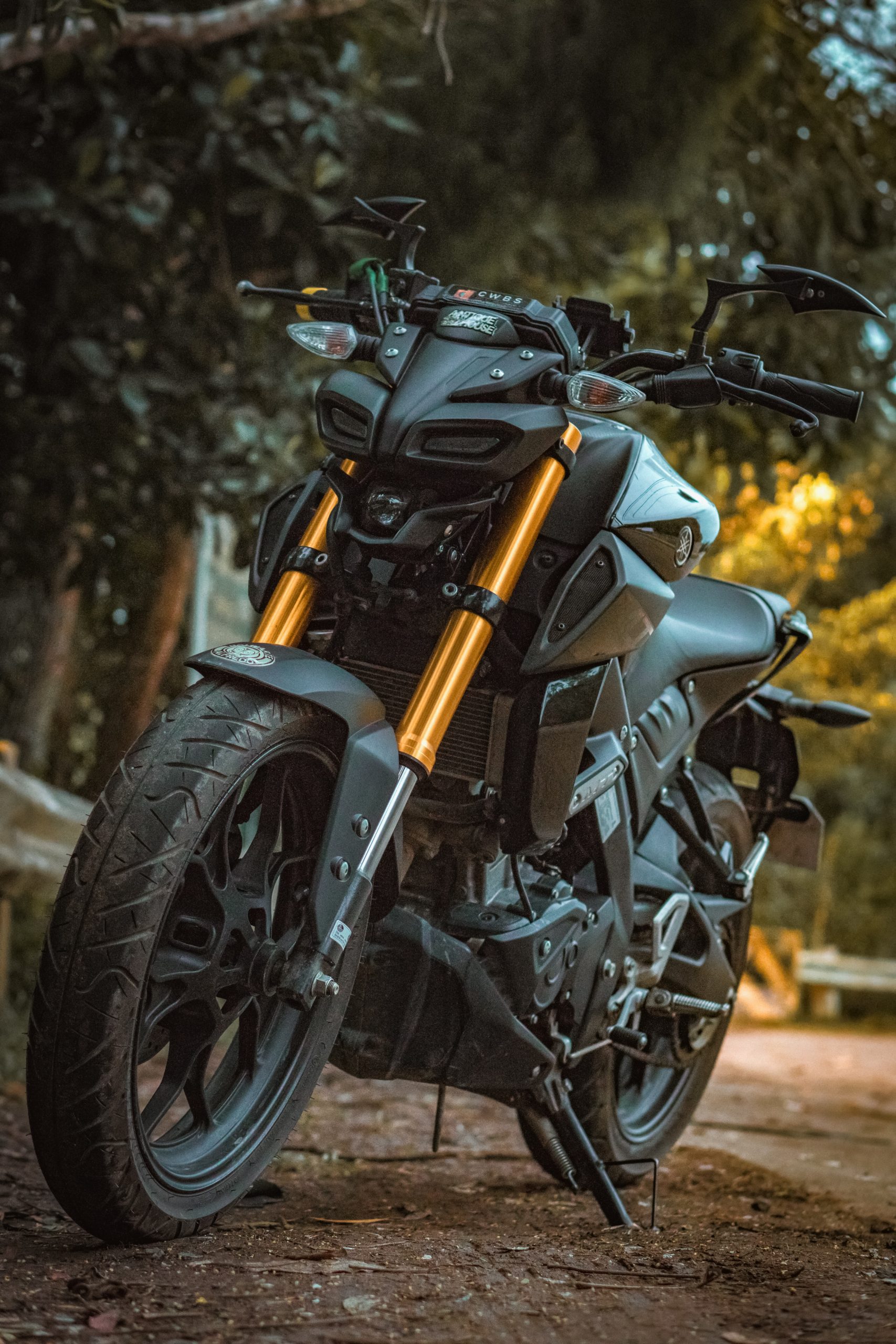
But I have to say, that’s a pretty damn good-looking $8000 bike.
ParticipantYes, motorcycle riding can cause hearing loss if you’re in the right environment, but more importantly, whether you damage your hearing or not, riding on the highway without earplugs WILL fatigue you much more quickly and make you less able to observe audio cues around you. If you’re riding a bike with a loud aftermarket pipe, and especially if you ride at the track, wearing earplugs will prevent serious damage caused by seriously loud engine noise (105+dB), both yours and others’.
ParticipantBaaahahahahahahahaha
Participant…but not in the way people might think. I had a very similar experience to you, Gary, in that at first, it didn’t help much if at all. My experience on bicycles was primarily road racing, though I did do some mountain biking for fun.
I would say that simply knowing how to ride a bike doesn’t help you learn to ride a motorcycle. However, I think that being a super-serious cyclist does help you with more advanced parts of riding. It helps with a lot of the intangibles, like “feel” for your traction, comfort at high lean, instinctive head movement, and perhaps balance. One area that I found it really helped me was braking. I was immediately a very good braker as soon as I figured out how the damn clutch worked. My hands were already trained for sensitivity in that particular motion, and I was already comfortable applying the brakes while leaned and turning. Learning to trail brake, and having confidence in the front tire while trail braking, came much easier than I think it would to somebody who’d never raced down a twisty mountain road before.
So right….just what everybody above me said
 Participant
I’ve been through two Shoei helmets and an Arai, so don’t think I’m biased against the “high-end” helmets. What I will say, however, is that the money you pay doesn’t translate to the safety of the helmet. Those helmets are expensive because of their aerodynamics, their venting, and their comfort, not because they are safer. A $100 Scorpion EXO-700 or $65 EXO-400 will protect your head just as well.
The catch with helmets is that every manufacturer’s helmets fit a slightly different shape of head. Don’t just buy a helmet online if you can helmet. Try to go into a local dealer and try on all the helmets you’re interested in. At the very least, try on a helmet from each brand you’re considering so you can figure out whether their head shape and sizing will work for you.
Good luck!
ParticipantI’ve gotten hit by little rocks kicked up by trucks, etc. with my FF helmet on, and it still stuns you for a sec. But again…it’s your choice.
ParticipantYou can do all the preparation for riding a motorcycle that you want. I’m like you, Overtime, in that, especially during the first few months I was riding, had my brained locked on motorcycles the whole time. I watched every internet video I could find, read every book, browsed all the forums. I “knew” what to do if the front wheel of my bike got light, or if the rear wheel started to spin. If you managed to tame a surprise wheelie with throttle control on your first go, you’re a lucky man, but most people aren’t. Knowing what needs to be done and being able to do it perfectly as a reflex reaction are two completely different things.
I’m not saying you shouldn’t do all those things and read all those books. That’s great! It gives you a great idea of the ins and outs of riding before you even start. But it’s no guarantee of immediate success, and as you said, Overtime, tons of practice is still required. Don’t think that you’ll necessarily be a better rider than somebody else because of any reading or video watching you’ve done prior to starting to ride.
And one more thing, and I promise I’m not trying to pick on ya (
). I hear this all the time, and it drives me nuts, so I just have to point it out: daily commuting in a “powerful” car gives you NO benefit when you start trying to ride. None. If you raced cars, that might help you understand certain things about traction and smoothness, but the 2-wheel vs. 4-wheel thing would throw you for a loop anyway. You can spin the wheels on a car without worrying about anything happening. A momentary slide is usually easily recoverable, depending on the car. On a bike, especially when you’re new, slide ==> crash. Cars don’t lean. Motorcycles do. It’s a completely different ball game. It’s like saying you should skip basic training with the Marines because you have an AR-15 at home.ParticipantIt’s getting better over time, but every review I’ve seen puts the build quality, fit, and finish of the Kawi WAAAAAY above the Hyosung 250. The GT250Rs have had a ton of reliability issues, though as I said, they seem to be getting better over time.
ParticipantThe DR-Z400sm is not at all competitive against the CRF450s and such, but I doubt competition capability affects sales outside of sportbikes and MX bikes (I’m not familiar with trials, so let’s leave that arena to you). The DR-Z400sm isn’t marketed as a competition sumo. Anybody serious about sumo is just going to convert a 450 or buy a Husqy or KTM. However, for the non-competing enthusiast, the $6500 DR-Z, pre-packaged with axle sliders, peg sliders, sportbike wheels and street tires, inverted forks, and other things is a slamming deal. It’s also street legal. As exactly that–a non-competing enthusiast–I can ride the bike off the lot without spending another dime.
Take the Yamaha WR450, for instance. It’s $7500 MSRP, and is still carbureted. On top of that, it has dirt bike wheels and tires and a dirt bike gear box. If you’re not competing and want to ride on the road (as WeaponZero obviously does), you also need to add mirrors and signals, and it still has all the dirt-focused fenders and plastics, etc. that you were complaining about in the DR-Z. Already we’re talking about at least $1500 in mods to get a street-going bike. Not really a bargain for an extra 50ccs. The Honda CRF450X is even more expensive at $7900, and has all the same pitfalls.
Even the Husqvarna SM 450 is $8000, still carbureted, and needs mirrors and signals as well. KTM doesn’t make a supermoto bike below the 690, so you’d have to convert one of the 450 EXC enduro bikes. Those start at around $8000 as well (KTM doesn’t release MSRP, but the 2006 was $7600 and prices only go up over 5 years), and they have dirt tires and again, no mirrors and signals.
All of these bikes also have about 20-35% less fuel capacity than the DR-Z. The DR-Z also has a TON of aftermarket support have been around in S and E versions for quite some time, can gain about 10 HP (a 30% increase) and lose about 20 lbs with about $1000 worth of mods, and stills comes out cheaper than a pre-sumo-conversion 450cc trail bike. There’s a reason that they’re very popular, and at least around here, every Suzuki dealer I’ve been to has two to four of them in stock. Also, as a DR-Z400sm owner in Seattle, I can assure you that the fenders pose no problem for wet riding.
So really, the DR-Z makes perfect sense, both practically and financially, for people who want a street bike. Granted, that’s not you, but no need to rain on another’s parade. Yes, there are substantially lighter and more powerful bikes out there, but they cost more proportionally and take a lot more work to get on the road.
ParticipantAnd yes, sumo is friggin’ fun as hell. I’ve started riding my DR-Z at PGP, and while that DR-Z is certainly no true sumo race bike, it’s close enough that I can still have a blast. Supermoto is a whole different (and very fun) ball game from the road course stuff. A lot cheaper too!
ParticipantGot up super-early to watch it, so it better be worth it! Nothing worse than falling asleep during a boring race.
ParticipantCongrats, and hope you enjoy the living snot out of that bike
Participant…that shouldn’t stop you. Here’s my history for perspective: started on a Ninja 250; got a GSX-R600 track bike; then got a DR-Z400sm city bike.
I wanted a GSX-R600 as my first bike. I REALLY did. They just looked so cool, and I’ve always been into sports cars, etc. One of my friends got a GSX-R600 as her first bike and loved it. And then I found this site. I ended up with a Ninja 250R and my god, was that the right decision. Having ridden the gixxer at 165mph at the track I can tell you with authority that, with the perspective I have now, I wouldn’t bother with a sportbike on the street. That’s why I bought the DR-Z (a supermoto bike). My slightly modded DR-Z still zips from 0-60 faster than a Porsche, but it tops out at 85 and has a friendly 400cc engine. It’s under 300lbs sopping wet, and it’s super easy to control, nimble, and stable at any legal speed. It can even haul passengers.
The honest truth is that, while they are gorgeous and sexy as all hell, true sportbikes aren’t really at home in the city. They’re really uncomfortable for long periods of time (read: over 30 minutes). They REALLY don’t like being ridden at low speeds. Any super-slow maneuvers like negotiating parking lots and u-turns are a royal pain in the ass. First gear is geared for 82mph. One second too much throttle can raise your speed 20mph. Too much front brake and the super-flickable steering geometry lets the front fork compress to the point of losing all rake (rake is the angle of the front forks; more rake means more stability and less ease in changing direction). At this point the bike because SUPER unstable (wants to just fall into a lean) and you can very easily endo the bike, tail over nose. Basically everything about it is geared for one very specific use, and one that doesn’t fit with city riding at all. Riding 2-up on a supersport is also incredibly uncomfortable and unsettling, both for you and your passenger.
The thing is, if what you really want is a city bike, I’d question whether or not you want a sportbike at all. Now the Ninja 250R is really just a standard in sportbike clothing, so I fully endorse that. It’s a fantastically fun bike…so much so that I still haven’t mustered up the guts to sell it. It will NOT however be a good bike for 2-up riding on the highway. You can do it, but I wouldn’t.
One more catch: you won’t be riding 2-up for a while (or at least, you shouldn’t be). The weight of a passenger, and the squeamishness of an inexperienced passenger in particular, can really change the way a motorcycle handles. All the things you struggle to do by yourself at the beginning will become difficult all over again when somebody gets on the back. For your safety, and that of your girlfriend, I would highly suggest waiting for at least several months (I would personally wait at least six).
I would also not get too caught up in your first bike. Most people in the motorcycling community get the itch for a second bike very quickly. They’ll either buy a second, or they’ll trade out their first. If your first bike is a Ninja 250, you can expect to sell it for almost what you paid. That gives you a lot of freedom to upgrade whenever you feel ready. I would suggest that route, but if you feel you must start a step up, I’d recommend the GS500 or some of the other low-displacement standards out there.
Anyway, sorry for blabbering, and good luck figuring things out.
ParticipantIt’s all about risk management. If you are willing to hit the pavement in a half-helmet in order to get the wind on your face, and you’ve really thought through what it would be like to die or live life with a horribly disfigured face, then get a half-helmet. If you’d like to avoid said consequences and are willing to put up with a few stuffy moments, get a full-face helmet. There is no debate about which is safer. None. A full-face helmet protects the most likely impact zones. A half-helmet does not. Notice that visor+chin+base-of-skull account for more than 60% of all helmet impacts:
It’s just a question of balancing your desire for physical comfort and risk, and that’s entirely up to you.
-
AuthorPosts

 ). I hear this all the time, and it drives me nuts, so I just have to point it out: daily commuting in a “powerful” car gives you NO benefit when you start trying to ride. None. If you raced cars, that might help you understand certain things about traction and smoothness, but the 2-wheel vs. 4-wheel thing would throw you for a loop anyway. You can spin the wheels on a car without worrying about anything happening. A momentary slide is usually easily recoverable, depending on the car. On a bike, especially when you’re new, slide ==> crash. Cars don’t lean. Motorcycles do. It’s a completely different ball game. It’s like saying you should skip basic training with the Marines because you have an AR-15 at home.