
Forum Replies Created
-
AuthorPosts
-

WeaponZero
ParticipantDouble Bubbles are aftermarket windscreens for faired bikes. My bike is an unfaired naked. Thanks for the suggestion though. It looks like I’m going to be going with the Givi 240A. Heres a link to a picture of one on a newer model SV.
http://www.twistedthrottle.com/imagecatalogue/imageview/7258/?RefererURL=/trade/productview/738/291/
As you can see it’s not all that big but according to what experienced riders are telling me that small windshield makes a HUGE difference and is all you need, provided you don’t try to sit perfectly upright while moving at highway speeds, something you shouldn’t be doing on a bike like this anyway.
So, this screen + those motard handguards. I like.
August 22, 2008 at 3:29 pm in reply to: Car drivers are soooo f****!!!!!!!!! (my impending foot smash incident) #10964ParticipantHe liked it because it was different. Back then everyone had either a Kawasaki 2 stroke Triple or honda CB750. The 400Four Cafe Racer was something different but still great.
ParticipantI’ve said it before in other posts and that is that I believe the Kawasaki Vulcan 500 to be the best entry level cruiser on the market. Considering your friend’s size it should be right up his alley. Despite the smaller engine it is actually more powerful than the Honda Shadow VLX 600 and is nearly on par with the V-Star 650. Of course the fact that it’s engine was originally designed for a sportbike (the Ninja 500R) is mainly responsible for that.
The V-Star 650 is another good choice worth considering but I would stay away from the Honda VLX 600 as many riders have described its lack of power output as “scary.” Its engine only puts out 35 horsepower, which is less than that of a Buell Blast and only 10 more than that of a Kawasaki Ninja 250R, but it weighs considerably more and isn’t geared properly to be able to take advantage of what power it does have. My dad, who rides primarily smaller bikes such as his Kawasaki KZ400, took one out for a test ride because he was considering buying it and said that it was just scary because despite being a 600 it didn’t have the power to be able to accelerate its way out of emergencies or turn left at an intersection with no left turn signal in between cars.
If you’re in the market for a used bike, Yamaha used to make an entry-level cruiser called the Virago 535 that was replaced in 2001 by the V-Star 650. It was an air-cooled V-twin with shaft drive, so there was practically no maintenance needed at all.
Participantacronym for Stupidly Quick, Underdressed, Inevitably Dead
ParticipantSorry, duplicate post
ParticipantSuzuki DL650 V-Strom, Kawasaki Versys
not EXACTLY what you’re looking for but they’re close and mild enough for beginners
Anything smaller and your legs will feel cramped and you won’t be able to ride for more than a few minutes at a time
August 21, 2008 at 7:48 pm in reply to: Car drivers are soooo f****!!!!!!!!! (my impending foot smash incident) #10899ParticipantThis same thing happened to my dad once. Well, it was similar. He was stopped at a stop light with a truck in front of him. It was a road with no other lanes. He was on his old Honda CB350, which was one of the cheapest bikes money could buy back then. The woman behind him apparently didn’t notice there was a motorcycle in between her and the truck, so she kept going planning to stop a meter or so from the truck. My dad saw her pulling up and because it was a narrow road and the truck was huge and took up all the space there was no escape route except into the oncoming traffic lane to the left. That wasn’t an option so he sat there, hoping she would stop. She didn’t and she crushed my dads bike between her car and the truck. My dad was okay because he dove off the bike and ran off the road when he realized she wasn’t stopping. The woman turned out to be wealthy but did not have insurance, and both my father and the truck driver agreed that as long as she paid for the repairs to the truck out of her pocket and bought my dad a new bike they wouldn’t report the incident. My dad ended up getting a brand new Honda 400-Four Cafe’ Racer that year…
ParticipantHarley owners seem to have a lot more respect for the Triumph brand name than other imports it seems like. Is it because Triumph’s story almost mirrors the Harley story and they feel a kinship? I know that back in the ’50s the Sportster was introduced specifically to fight the growing trend of sportier British made bikes. It was faster, lighter, and just all around sportier than any other bike Harley made at the time. It was a 1000cc v-twin that was chain driven, an oddity for Harley. And it was built specifically to go up against the Triumphs that were becoming the new “bad boy” bikes of the world.
ParticipantIn order to answer your question I’m going to give you a brief history of the Harley-Davidson brand.
Up until the late 1950s there were essentially two brands of American motorcycles: Harley-Davidson and Indian. Indian’s quality and performance were far superior. However, they went bankrupt because they insisted on building their bikes with hand and foot controls swapped around so that people used to riding other bikes couldn’t get the hang of riding an Indian. That left Harley as the only surviving brand of American motorcycles, and their quality was very poor. At the time, all of their bikes were outfitted with a type of engine called the “panhead” that had a reputation for puking oil all over the road. Triumph, whose bikes were not much better, but offered superior performance, replaced Harley-Davidson as the “bad boy” bikes in the 60s as a result of this. Harley’s sales slumped and they virtually went bankrupt and the brand ended up being bought out by AMF (the bowling equipment manufacturer).
In the early 70s, while under the control of AMF, Harley finally came out with a new engine for their bikes since the introduction of the “panhead” decades earlier. This engine was called the “evolution” engine and was a major step up from the “panhead.” Build quality improved but there were still numerious reliability issues that were never resolved; most notably oil leaks and parts that would shake themselves off of the bike. During this time, Japanese motorcycles were skyrocketing in popularity because a motorcycle Honda came out with in 1969 (The CB750) completely changed the face of motorcycling. It handled better, was faster, and more reliable than anything that had come out before it without sacrificing comfort and practicality. The rest of the Japanese manufacturers followed Honda’s path and began coming out with their own bikes based off of the CB750 design that essentially blew Harley completely off the map. During this time period, Harley-Davidson and it’s “evolution” engine for all intents and purposes may not have existed. Near the end of the ’70s, Harley’s original owners bought it back from AMF using a government loan.
In the 1980s, Harley simply could not compete with the Japanese because, on top of their bikes being more more powerful, more reliable, cheaper, and more refined, they were starting to come out with cruiser-style bikes that were taking away what little market share Harley had left. The US government stepped in and imposed a huge tariff on all imported bikes 750cc and over. This tariff was referred to as the “save Harley tax”. Prices of larger displacement Japanese motorcycles during this time skyrocketed to higher than the prices of even full size Harleys due to the tariff, however many Japanese manufacturers found ways to beat it (sleeve the cylinders on their 750s and market them as 700s). Harley used this time to try to make their bikes more reliable, however, it wasn’t until years later that they made their first giant leap forward since the introduction of the “evolution” engine.
In 1999, Harley came out with an engine called the Twin Cam 88 that replaced the “evolution” engine in all of their bikes except for the sportster series, which are still powered by “evolution” engines. The Twin Cam 88 bikes are Harley’s first truly “reliable” engine (although they say that the variant of the evolution in sportsters has been relatively problem-free). It is on par with the Japanese competitors quality-wise, power-wise, and refinement-wise, but is by no means superior. You could say it still trails behind bikes like Yamaha’s Road Star simply because of the fact that you don’t get anything more by spending double the price on the Harley.
Summarized: Harleys pre-1999 are unreliable and overpriced save for the Sportster series, and newer Harleys are still overpriced compared to Japanese competitors because you’re not getting anything more for your money. If respect matters to you then understand that anyone who looks down on you for not being willing to pay more for just a name is an idiot who doesn’t deserve YOUR respect. Also, I do get waves from Harley riders who wear helmets on my Suzuki SV650. It seems like the guys who are in it because they want to be Henry Fonda in Easy Rider and don’t wear helmets and look like Willie Nelson are the only ones who will be giving you problems. Harleys redesign their engines/bikes once every 30 years or so because that’s how often they feel the need to do some R&D. Japanese bikes are redesigned every 3-4 years because of technological breakthroughs constantly being discovered. I choose not to give money to a company that does things that lazily.
People who are loyal to the Harley brand and scoff at others feel the need to make up for, with their own attitudes, the fact that Harley did nothing to try and win back the people when Triumph stole their thunder in the ’60s and the Japanese bikes did in the ’70s and ’80s. They did not come out with new models. They did not try to build better bikes. They did not come out with new engines or new leaps in technology. They did not offer sales promotions. It was only while under the ownership of AMF that they came out with the only technological leap forward between the ’50s and the introduction of the Twin Cam 88 engine in 1999. They simply rolled over and let whatever was going to walk all over them do it. In the ’80s when they were nearly brankrupt they did nothing aside from let the US government try to bail them out. No new engines, no new models, no new technology, nothing. Harley’s lineup has been virtually unchanged since before I was born.
Participant250 will be a better starting point but the VLX is marketed as a “beginner bike”. It’s definately got a mild enough powerplant but the main issue is weight. the Vulcan 500 doesn’t really have that issue as everything about it was designed to take advantage of its sportbike-derived engine. It is as light as some 250s.
ParticipantAnother bike you should add to that list is the Kawasaki Vulcan 500. In fact it’s probably a better choice than any of those. It is quick, light for a cruiser, easy to handle, and is probably the single best beginner-oriented cruiser on the market. Because it shares its engine with a sportbike (the EX500) you know it’s got some giddyap when it’s needed.
ParticipantIt won’t be too big, probably something in between a flyscreen and a quarter-fairing. It definately won’t cover the handlebars.
Look at Givi’s website for the A750, A755, and A760 to get an idea of what I mean. Maybe not those EXACT ones but something along those lines.
Also motosliders frame sliders
ParticipantFirst of all, for some reason, when I use this site thru my work computer I can’t use the reply feature to reply to individual posts.
Secondly, the stability issues I’m having I believe are mostly wind related. I’ve been looking into fairings (and possibly motard-style handgrip shields–they look cool!) from Givi and I do plan on getting one EVENTUALLY but I don’t know enough about the way they slice through wind to be able to shop around correctly. There are smaller flyscreen-style fairings and then there are quarter-fairings. Some people I’ve been asking say the small flyscreen-style fairings do just as much as the quarter fairings and that makes no sense to me.
My SV has a GSXR600 rear shock that the previous owner tuned for his own bodyweight. He weighed 210 lbs. I haven’t yet retuned it for myself but I don’t really know what I’m doing with that and am afraid of messing things up. Everything else about the bike is still stock.
Riding on the highway IS fatiguing when your body is acting as a parachute.
I have plans for the SV to add a whole bunch of mods (mostly visual but nothing too out there like flourescent lights) to the SV to make it a better commuter/tourer without sacrificing handling.
The front tire checks out fine as far as air pressure goes, but the rear tire I cannot check because the valvestem is damaged in a way that prevents a tire gauge from being able to get a reading off of it (at least, my cheap $3.00 tire gauge). I figured it wouldn’t be too much of an issue because in approximately 3 weeks I’m taking it in for a major service and a new rear tire and they’ll address the valvestem issue when putting on a new tire.
ParticipantThe Monster is the most desireable bike in a market segment that I find particularly attractive; that is, naked sportbikes/standards. I was not bashing the bike at all. But I have already begun to experience the shortcomings of my SV (most notably stability on the highway) and I’m already looking into purchasing a bike that doesn’t experience these shortcomings.
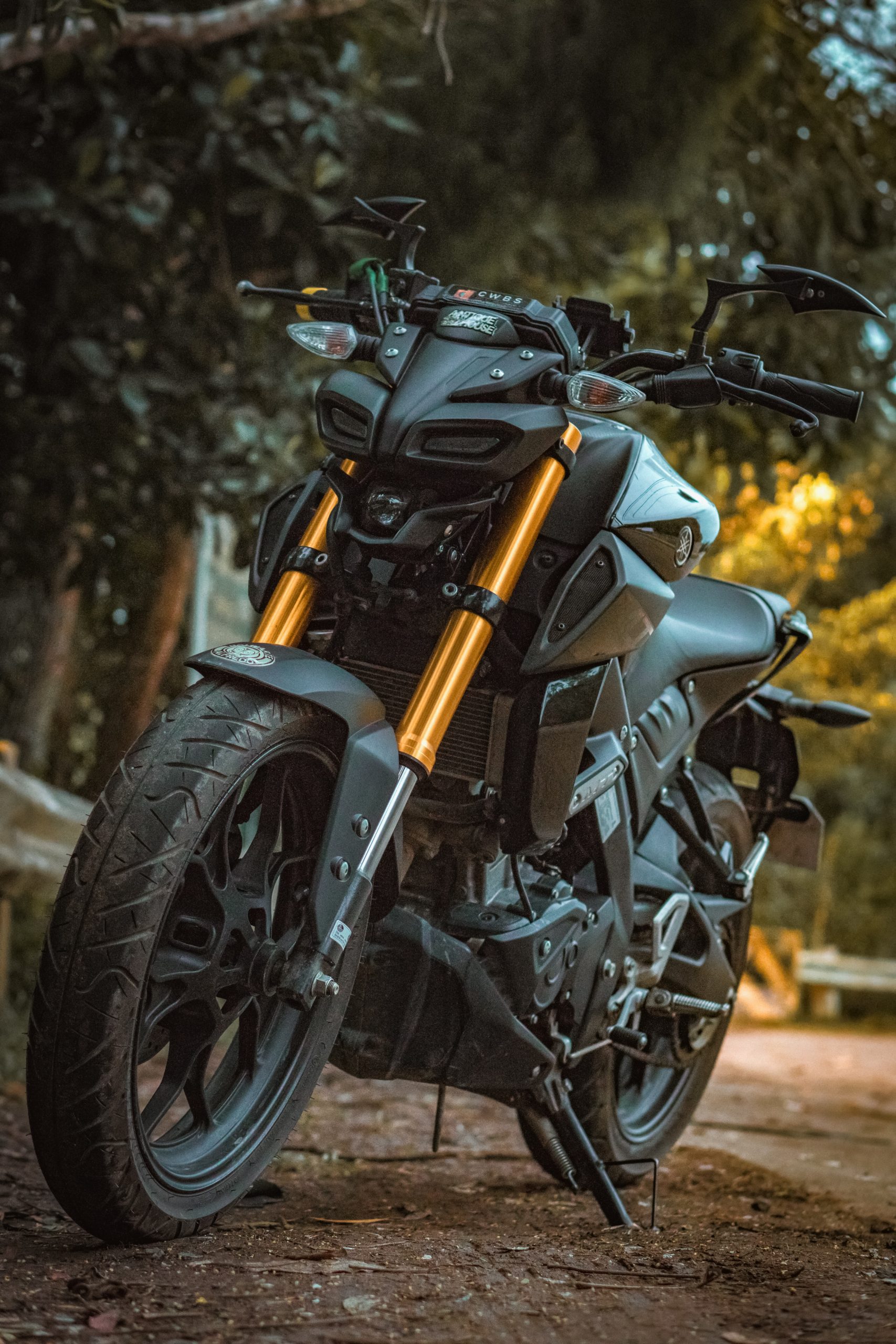
ParticipantNice bike
 I’ve got a thing for japanese standards/UJMs.
Shaft drive is nice too, low maintenance.
Doing crappy because I’m at work
lol -
AuthorPosts
 I’ve got a thing for japanese standards/UJMs.