
Forum Replies Created
Suzuki DR200SE Review
-
AuthorPosts
-

Jeff in Kentucky
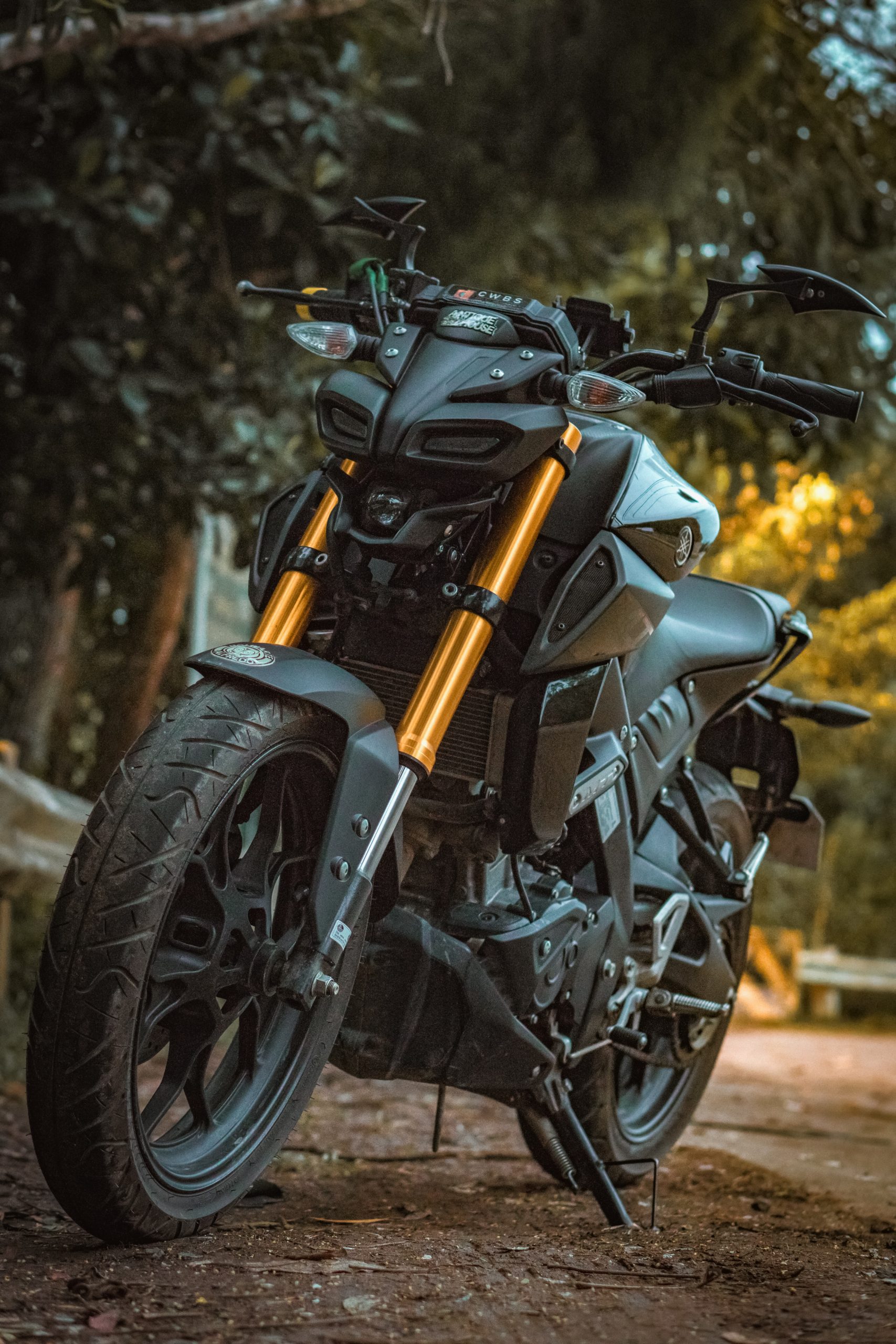
ParticipantI like the way the color and texture of the seat matches the side panels below the seat, and the red stripes on the rims matches the red fairing and gas tank paint.
ParticipantFor very long storage, it is best to drain all of the fuel and spray a light oil inside the gas tank, cylinders and carb float bowls. For typical winter storage, you want to keep the gas tank full of stabilized fuel, and the carb gaskets moist with fuel so they do not shrink and crack. Here is some more writing about Sea Foam for some people with old bikes:
http://www.650rider.com/index.php?name=Forums&file=viewtopic&t=3305
ParticipantI added the mini filter here, on the right, with a 10 micron stainless steel mesh that is washable (it used to be sold by K & N):
http://www.golanproducts.com/filters.html#filters-mini
I also use Sea Foam in the gas tank every winter, when my motorcycle sets more than 3 weeks without running.
I also leave the fuel valve on all the time, so as gasoline evaporates from the float bowl, more fills it back up from the gas tank and hoses as the float valve opens.
Also, I try to get gas from the newest underground tanks, and not when a truck is filling the tanks and stirring up all the sediment usually settled to the bottom of the tank. My favorite fuel is Shell, I will tolerate Chevron and BP if convenient at the time, and I stay away from the no reputation to protect little gas stations as much as possible.
ParticipantI enjoyed reading some of the history at the site you gave a link for, and this was my favorite part (some editing to shorten it):
When Harley-Davidson incorporated in 1907, its board of directors became the Scottish style clan chieftains. That clan stayed tight and grew rich through the gravy years of the 1910s and 1920s. During the tough years of the 1930s, the growth years of the 1940s, and the British invasion of the 1950s, this clannishness served the company well.
By the early 1960s, however, the clannishness wasn’t working so well. Clan loyalty to the company had been diluted over three generations, the new clan chieftains weren’t necessarily the best men for the jobs, and clannish emphasis on paying shareholders before investing in new equipment and designs had left Harley with outdated factories and designs – just as the Japanese moved in.
It could be said that Harley’s clannishness had turned a proud, kilted Highland piper into the toothless, inbred banjo picker of the motorcycle industry.
Harley’s first steps toward diversification came in 1960, when it began building scooters and bought into the Italian firm Aermacchi to get a new line of lightweight motorcycles. (My first motorcycle was a 60cc 2-stroke 2-speed imported by Harley from Italy, that I bought very used in 1971). In 1962, Harley bought the Tomahawk boat works and began building golf carts and boats.
With the investment brought in by the first stock sale and the sales bump brought on by the new Shovelhead engine, 1966 was the most successful in company history.
Despite diversification and good profits, the stockholders wanted more. Problem was, there was no longer a quick way to raise the money to diversify. After the last issuance of “print-and-sell” stock, members of the clan only owned 53% of outstanding shares. If they sold stock or the company printed more, the clan would lose its majority control.
This crisis split the clan into two camps. “We could diversify two ways,” explained John Davidson, board member and son of then-president William H. Davidson. “We could start building lawn mowers and so on, or we could get sucked up. The merger group held the majority and won, so we began looking for someone to buy the company.”
BP was an unstoppable acquisition machine that was virtually sheltered from taxation after Castro had seized the company’s Cuban sugar factories, giving it a $54 million “paper” loss that the company used to great advantage. By 1968, companies it controlled built products as varied as guns (Smith & Wesson), chemical mace, breathalyzers, motor homes, boats, and industrial machinery. Most of these companies are still around.
“AMF was the result of an antitrust action in the early part of the century, in which the tobacco makers were forced to divest themselves of manufacturing the machinery that processed tobacco and made cigarettes,” explained Vaughn Beals. “They then began acquiring leisure businesses.” Those businesses included boats (Hatteras) and bowling pin setters.
What set AMF apart was its chairman, Rodney Gott, who in his pitch emphasized that he was a long-time Harley fan and offered advice on fending off BP’s hostile takeover. “Rodney Gott was a great pitchman,” remembered John Davidson. “He sold us a real bill of goods, telling us he would keep Harley-Davidson’s management in place and that we would be autonomous.”
When the results were announced, 78% of stockholders had voted to merge, even though AMF’s offer was 20% less than BP’s.
Like most marriages, that between AMF and Harley-Davidson began well. As soon as the merger papers were signed, AMF began pumping money into Milwaukee, allowing Harley to update facilities, redesign the XR-750 to make it a winning flat track racer, and to improve the Big Twins and Sportsters. At first, anyway, AMF even seemed to follow through on the promise to let Harley run itself.
This change in the balance of power was plain for all to see when the 1972 models were released: “AMF” had pride of place preceding “Harley-Davidson” on the new tank badges. Balancing that out was the change to hydraulic disc front brakes, which everyone lauded as a huge improvement over the old drum brakes.
AMF screwed the factory’s throttle full on and tried to catch Honda. That caused immense problems in Milwaukee, as experienced foremen and workers got tired of being told what to do and being forced to work overtime. Many retired or moved on, taking hundreds of years of cumulative experience with them. This “brain drain” later came back to bite AMF Harley-Davidson.
Before long, quality fell victim to the production push, and so did good relations between management and the workers. So, after 10 years of peace at Harley-Davidson, the workers struck for 25 days. On both sides, the whole experience had a hardening effect on attitudes that would later hound the company. Despite all those problems, the company cranked out over 34,000 Big Twins and Sportsters for 1972, a 50% increase.
AMF’s York plant was largely idle because the two products made there – munitions and automatic bowling-pin setters – were no longer in demand as the Vietnam war wound down and the bowling craze of the 1950s and 1960s died. On the surface the move made sense.
“AMF told the union no one would lose their job,” said Tom Gelb, “but then they let a bunch of people go. They lied through their teeth.”
A group soon formed who called themselves “HAWG,” an acronym that stood for Harley Action Workers Group, and they started a program of passive resistance (by refusing to work overtime). Other workers took a more militant stance. “It was a bad scene,” explained Tom Gelb, “and we had sabotage – ball bearings and cylinders and such. It was minimal, but it was very traumatic.”
When their old union contract expired, Harley’s workers walked out. Production stopped, and things got ugly. The company brought in replacement workers. By early September, AMF Harley-Davidson was over a barrel. It had already introduced the 1975 line-up to dealers and the press, but none had been built because of the strike. With no other choice, Harley agreed to the workers’ demands.
For 1978, engineers bored and stroked the Shovel to 80 cubic inches and offered the larger engine alongside the old 74 cubic inch models. They also added electronic ignition and made subtle updates every year after to make the engines quieter, cleaner burning, and more oil-tight.
To pay for all the updates, AMF pushed for even greater production. In 1970, AMF’s first full year of ownership, Harley’s workers built just over 16,000 Big Twins and Sporsters. By 1976, AMF had tripled production to 48,000 Big Twins and Sportsters. The higher production rose, however, the lower quality sank.
Harley’s reputation suffered horribly. Dealers often had to spend many unpaid hours getting just-delivered bikes to run right. And customers suffered the hassle of returning their new machines repeatedly to dealers for warranty work and the indignity of breaking down or having parts vibrate off on every short ride. Motorcycle magazines stopped testing new Harleys to save the company the embarrassment or retelling how many times the bike broke down during the test.
From World War II through the early 1970s, Harley’s share of the heavy-weight motorcycle market had always been 75% or more. By 1978, it was in the mid-30s percentile.
The Harley Davidson buyback was consummated by a small group of Harley-Davidson stockholders on June 16, 1981.
The new owners were excited and apprehensive, because they knew the reality that awaited them in Milwaukee. They were obscenely in debt, the company’s reputation was in tatters, the whole country was in recession, the company and its dealers were already overstocked with motorcycles they couldn’t sell, and the motorcycle market was in a death spiral. The one positive aspect was that they could convincingly blame all the ills of the recent past on AMF, giving Harley-Davidson the opportunity of a fresh start.
Tom Gelb looked at Japanese manufacturing methods and immediately saw the potential of just-in-time inventory, statistical process control, and employee involvement techniques. Within a few months after the buyback, Gelb tried such techniques out in a pilot program and then expanded them gradually throughout the company.
Gelb’s changes saved the company. In the long term, it was the key to improving quality. It was too late to help the 1981 model year, though, and sales fell to the lowest level since 1973.
Then came 1982, the year spring never sprung for the Motor Company. “A semi-recession had hit automotive earlier,” remembered Tom Gelb, “and all of a sudden in March 1982, it hit us. At the time, the Japanese manufacturers had about 18 months’ worth of finished inventory in the country, and they were selling two and three-year old bikes right out of the crate and discounting them, so the bottom fell out of the market. (I am seeing some 2 years old new bikes at the dealers now) “I remember we had a policy meeting, and in the next weeks we cut our production rate in half, laid off 40% of our workforce, and cut all the salaries of the officers by something like 12% and the salaried workforce by 10%.”
How close was it? Engineer Dave Webster left Harley in 1982 after being told by a friend and fellow Kiwanis Club member who sat on the board of one of the banks, “Harley has about 30 days before they’ll have to close the door. Beat the rush!” With Gelb’s help, Harley dodged the first of many bullets. The company survived, but production fell to just over 24,000 units, about half the total for 1981.
Harley’s big losses for 1982 were the result of more than a recession and the company’s still-poor-but-improving reputation for quality. Harley was caught in the middle of a grudge match between industry leader Honda and pushy rival Yamaha. Yamaha had staked its corporate reputation on winning dominance from Honda in 1982. In turn, Honda staked its corporate honor on retaining the lead. Honda and Yamaha crashed together in the U.S. market like two sumo giants, and starved-to-the-bone Harley was crushed between them. Chairman Vaughn Beals fought back with the only tool left. On September 1, 1982, he petitioned the ITC for relief. Unsold Yamahas and Hondas piled up and were sold at ridiculous prices. (I rode a 1978 650 Yamaha from 1980 to 1985, a more reliable, cheaper copy of a Triumph Bonneville).
The ITC heard arguments on Harley’s petition on November 30, 1982. Beals brought powerful friends to the meeting, including a congressman and a senator. The Japanese made a fatal error before the hearing ever started. “They had one attorney represent all four companies, which was tangible evidence of Japan Inc.,” Beals said, “I can’t conceive of anyone dumb enough to do that, but they were.”
The ITC adjourned the hearing and deliberated for months before recommending tariffs of 45% on all Japanese motorcycles over 700cc (after the first 7,000 imported) the first year, with diminishing percentages in the following four years. On April 1, 1983, President Ronald Reagan signed the tariffs into law.
Overall, the tariff was more symbolic than directly helpful. Anticipating the possibility that they might lose, the Japanese had stepped up production and shipment of their large 1983 models to get them on shore before the tariff took effect. A few months later, the Japanese reworked all their 750s into tariff-evading 700s, and Honda and Kawasaki avoided tariffs on their larger models by shifting assembly to their U.S. plants.
As a result, Harley’s sales for 1983 were even worse than in 1982. Citicorp held off on foreclosure, but every one involved knew that if there weren’t real improvement in the situation soon, it was all going to fold.
By keeping the old Shovelhead engine in production, Harley-Davidson had a fall-back in case the Evo bombed. At he same time, the company had something to offer both the traditionalists and the hoped-for newer buyers, giving both reasons to believe in the new Harley-Davidson.
To those who wanted modern refinement, Harley would offer the new Evo motor in its newer, rubber-mounted chassis. To the traditionalist, Harley would offer the Shovel motor in its solid-mount, twin-stock FLH and FX chassis.
The Evo was a hit, and that meant curtains for the Shovel. The final batch of Shovels – last-edition FLHXs – left the line in June 1984, and that was the end for both the grand old Shovelhead engine and for the solid-mount, four-speed Electra Glide.
Participant“How much cc will I need to flow with traffic and what would be an overkill for a newbie. One thing for sure, it cannot be too heavy”
The 250cc Kawasaki Ninja will go over 100mph, but it is not the best choice for a passenger or longer trips. The 400cc Suzuki Supermoto is also fast enough for interstates, and it is a little better with a passenger, but that narrow stock seat will feel rough if you do a couple hundred miles plus in one day. The KLR-650 Kawasaki is a better dual sport for long trips and a passenger, but it is quite a bit heavier than the other two bikes listed here, and it is a little too powerful for a beginner, but it is great for someone that started out with dirt bikes and is used to dirt bike style handlebars. People often ride these across South America.
The main things I would consider- how much time are you going to be on the interstates? A 500cc Kawasaki Vulcan cruiser or 500cc Suzuki or Kawasaki sportier bike are probably better choices if you are going to be at 75 mph a lot, and your choices for small bikes is greatly widened if you will mostly stay on 55 mph roads without a passenger. Also, it is wisest to buy an old 250cc dirt bike and learn to slide it sideways on wet grass first- it will save your second bike and your body from some possible major damage while you are learning. One last point to repeat- take the Motorcycle Safety Foundation beginners class first, and see what you think about the bike they give you to train on.
Scooters- very practical, if you can handle the looks of them. Some have the engine mounted on the swingarm, for lower costs and poorer cornering. The 500cc Yamaha T-Max has amazing handling for a scooter, with a sportbike-like frame, and it is quite expensive for a scooter.
ParticipantMost likely, the idle circuit inside at least one of the carbs is clogged (most likely the carb for the cylinder with the dirty spark plug, since I think this 250cc Ninja has 2 carbs), from improper storage while the bike is parked for weeks at a time. To prevent this in the future, add a fuel stabilizer to the gas tank, run the engine enough to get it into the carbs, and leave the fuel valve on all the time, so as fuel evaporates from the carb float bowls, more fuel comes from the gas tank to keep them filled.
My favorite Sea Foam article, about a first attempt before taking the carbs apart for cleaning:
ParticipantI also got up early to watch the race- I liked seeing Lorenzo pass Rossi, and I miss the short speeches by the top 3 finishers after the race that they used to show. Now they put some interviews with the Americans first, since they are not usually in the top 3. Bad luck for Stoner and Spies crashing out.
ParticipantThe last afternoon reshowing of the MotoGP race was taken over by Nascar trucks, after a weather delay. Tomorrow, Sunday May 23rd the race will be shown live at 8 am on the Speed cable TV channel. Here are the top ten qualifiers:
1. Valentino Rossi on a Yamaha, to take his first pole position of the 2010 season. and the prime starting spot at the French circuit for the first time since 2005.
2. Jorge Lorenzo made it a Yamaha one-two.
3. Dani Pedrosa on a Honda.
4. Casey Stoner on a Ducati.
5. Nicky Hayden on a Ducati.
6. Randy de Puniet on a Honda.
7. Andrea Dovizioso on a Honda.
8. Colin Edwards on a Yamaha.
9. Loris Capirossi on a Suzuki.
10. Aleix Espargaró on a Ducati.
Ben Spies crashed during qualifying for 12th place, but will likely race tomorrow even though he has a sore ankle.
ParticipantIf you don’t mind getting your jaw broke in a crash, wear less than a full face helmet. I broke my jaw once in a car accident, and would prefer to not break it again.
This is the best article I have seen about helmet design, and much of this info was used to improve the Snell 2010 helmet standard, so it is much safer than the Snell 2005 helmet standard:
http://www.motorcyclistonline.com/gearbox/motorcycle_helmet_review/index.html
ParticipantThere was a new 400cc Suzuki Supermoto at the dealership in Georgetown , Kentucky, when I was there 2 weeks ago.
I agree you will probably not get much of a discount if you have to order a new bike. Try calling several dealers, and make them an offer over the phone, either to order the bike or to see if they have one already. If a bike is difficult to keep in stock, the price goes up. You will probably get the best deal for a yellow one, since it is a less popular color.
ParticipantThis guy did not wear the proper gear- notice he is slurring his words some, probably from at least a partial concussion, even though he was going slow when it happened:
ParticipantA guy bought a motorcycle like mine for $5,200, then put a couple thousand into bigger and higher compression pistons and bigger valves, then broke a rod end and had custom rods made for it, to go from 35 to 70 horsepower. He could have bought a used Suzuki SV650 with 70 horsepower stock. He sold this bike for a big loss of money.
Sure, you are free to waste your money- we would all be wiser driving a used Geo Metro three cylinder car or a used Hyundai Elantra year round for a family of four, but I think it is important to show beginners how others think they wasted their dollars when it comes time to sell their one of a kind masterpiece.
ParticipantI have had one of these gel pads on top of the stock seat for the last 8 years. It feels strange at first, less stable, but after a while your brain gets used to the extra movement from it. Mine helps a lot for the long rides, to reduce the amount of discomfort between gas stops. I also added a 3/4 inch thick gardener’s knee pad underneath the gel pad, inside the same cover that came with the gel pad. My legs are plenty long enough for the taller seat.
The Airhawk brand cushion with air in it is supposed to be better, but costs more. Your best bet might be a custom seat with a lowered area where your tailbone is.
Some butt pad testing:
http://www.motorcyclecruiser.com/accessoriesandgear/motorcycle_seat_comfort_pads/index.html
ParticipantThe newer 250cc Ninja looks more modern, has a better suspension, and has fuel injection.
The older one (before 2008) is less expensive, has taller and more comfortable handlebars, and an older suspension design that does not work quite as well, and older carbs instead of fuel injection.
Go to the last recommended reading on the right side of this page for more comparison info.
ParticipantI would sit on both- have the sales guy hold the bikes up so you can put both feet on the pegs. One will probably naturally feel like it “fits” you better, and you can change footpegs, handlebars and seats to make it even better for you.
The technology is better for the newest 250cc Ninja- it will start easier and not have a long warm up to run right, and it will probably get better gas mileage. The 500cc Suzuki is a little heavier and has a little more power, so it might be better with a passenger or at 75 mph compared to the 250cc Ninja. The insurance is probably less for the 250cc Ninja.
-
AuthorPosts